
Società del Vino Four Wines, Four Sides of Tuscany

Four Wines, Four Sides of Tuscany

From the hills of Lucca to the Maremma, four bottles that show there is much more to Tuscan wine than Chianti and Brunello.
When most people think about Tuscan wine, the first names that come to mind are Chianti and Brunello. But one of the things I love about Italy is how quickly wine changes as you travel from one small area to another.
These four bottles are a perfect example.
All four come from Tuscany, yet they represent very different places and styles—from the hills surrounding Lucca to the warmer landscape of the Maremma in southern Tuscany.
Two are reds. Two are rosati. And three give us different expressions of Tuscany's signature red grape, Sangiovese.
This is exactly what I want to explore with Società del Vino: not scores and rankings, but the wines, places, food and people that make drinking Italian wine so interesting.
Fattoria di Fubbiano San Gennaro Riserva 2021
Colline Lucchesi DOC Riserva · Lucca, Tuscany · 14%
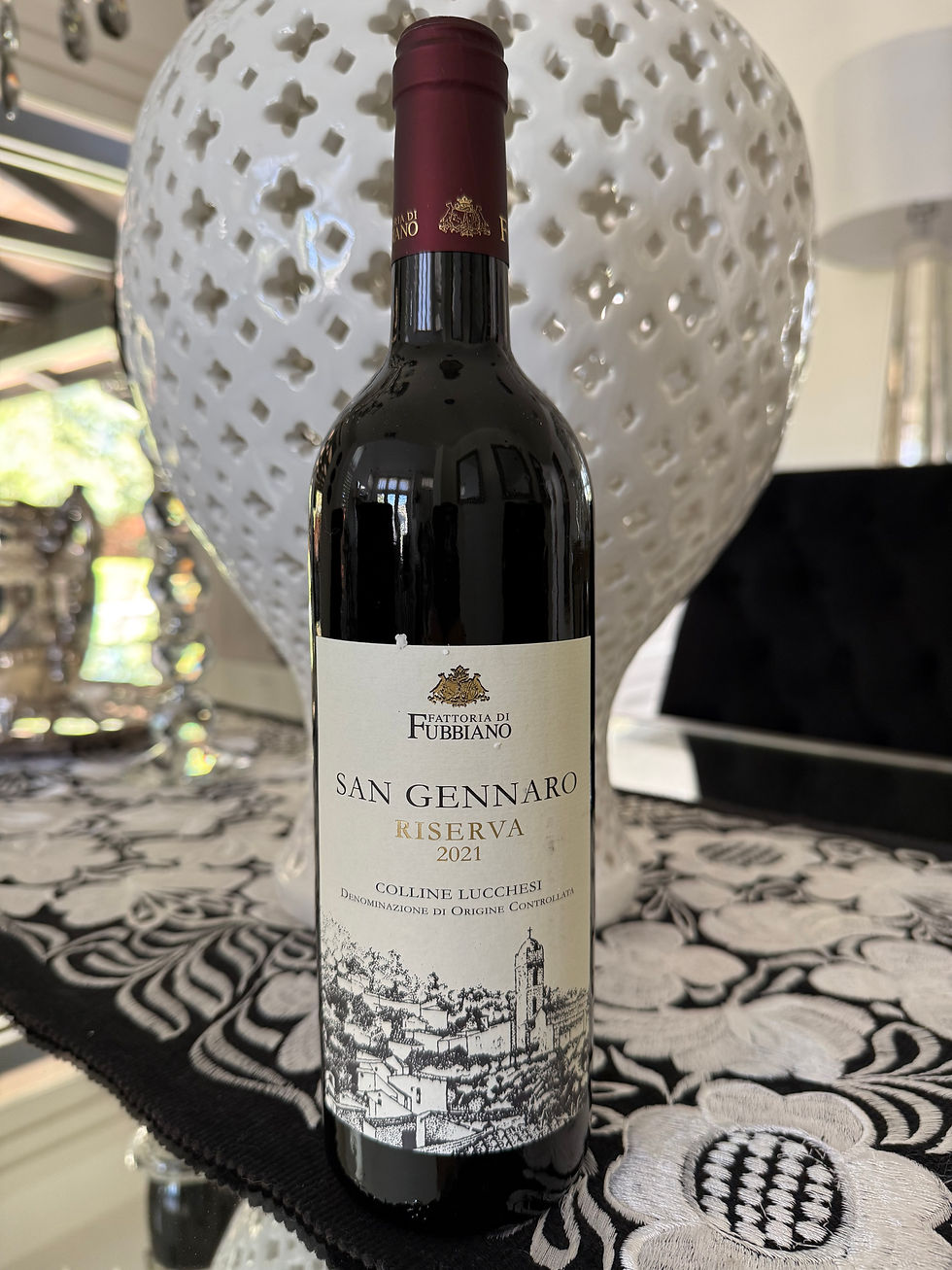
Our first bottle comes from the Colline Lucchesi, the hills surrounding Lucca in northwestern Tuscany.
Just outside the city, between the villages of Tofori and San Gennaro, sits Fattoria di Fubbiano. The 45-hectare estate stretches across vineyards, olive groves and woods on the south-facing slopes of the Lucca hills. Those mineral-rich hills form a natural amphitheater that helps shield the vineyards from northern winds and creates a relatively mild climate.
Wine has deep roots here. The Corsini family arrived at Fubbiano in 1921, and the estate bottled its first labeled Colline Lucchesi wine in 1969. Today, Fubbiano combines that history with a modern winery completed in 2009.
What's in the glass
San Gennaro Riserva is a classic Tuscan red built around the character of Sangiovese and traditional local varieties.
Expect ripe cherry and red berries, violet, herbs and spice, with the acidity and savory character that make Tuscan reds such natural food wines.
This isn't about making the biggest or heaviest red possible. It's a wine that belongs on the dinner table.
What I'd eat with it
Pappardelle with ragù would be my first choice, but this would also be right at home with roasted meats, wild boar, bistecca or aged pecorino.
Frank's Take
This is what I like about exploring Italian wine. Colline Lucchesi doesn't have the international recognition of Chianti Classico or Montalcino, but there's a long winemaking tradition here—and plenty worth discovering.
Rosa di Notte 2025
Costa Toscana IGT Rosato · Montecarlo, Tuscany · 13%

The second bottle keeps us in northern Tuscany but changes direction completely.
Rosa di Notte is a 2025 rosato produced by Stefanini Tronchetti in Montecarlo, a small hill town east of Lucca with its own long wine tradition.
The beautiful salmon-pink color tells you immediately where this wine is headed: fresh, bright and meant to be enjoyed young.
What's in the glass
Think fresh red berries and strawberry, a little citrus and floral character, crisp acidity and a clean, dry finish.
This isn't a rosé that needs to be overthought. Serve it cold, put some food on the table and enjoy it.
What I'd eat with it
This is made for aperitivo.
I'd put it alongside prosciutto, burrata and olives, or serve it with grilled shrimp, seafood, a simple pasta or a summer salad.
Frank's Take
Some wines make you think about the wine. Others make you think about where you'd like to be drinking it. Rosa di Notte is definitely the second kind.
Poggio Maestrino Spiaggiole 2024
Morellino di Scansano DOCG
Maremma · Tuscany · Sangiovese · 13.5%
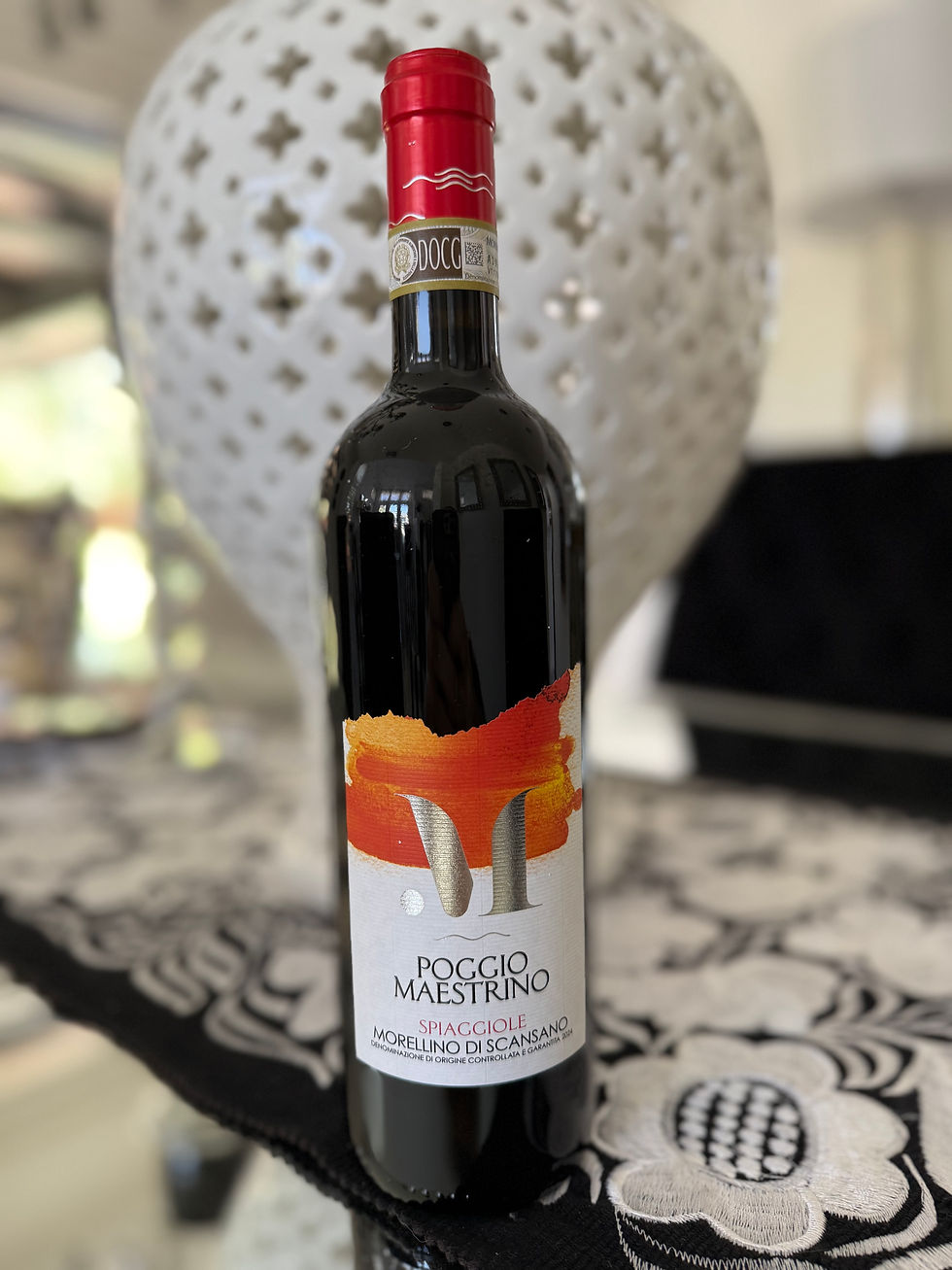
For bottle number three, we're heading south to the Maremma, Tuscany's warmer coastal territory.
And this bottle introduces one of those pieces of Italian wine terminology that can initially make everything seem more complicated than it really is:
Morellino is Sangiovese.
Morellino is the local name associated with Sangiovese around the town of Scansano. So we're tasting Tuscany's great red grape again, but this time grown in a much warmer part of the region.
The back label on this bottle tells us quite a bit. The wine is Sangiovese, organically produced from vineyards at approximately 200 meters elevation. It's fermented at controlled temperature in stainless steel, aged in steel and bottle, and bottled unfiltered.
What's in the glass
Compared with Sangiovese from cooler parts of Tuscany, Maremma can give the grape a riper, rounder and more generous fruit character.
Look for ripe cherry and red fruit, Mediterranean herbs and spice, while retaining enough acidity to keep everything lively.
It's a great comparison with the San Gennaro: both are Tuscan reds centered on Sangiovese, but their different locations give them different personalities.
What I'd eat with it
Grilled steak, sausage, roast pork, pasta with meat sauce or aged cheese.
And I'd be perfectly happy opening this one with pizza.
Frank's Take
Morellino di Scansano is a great reminder that you don't have to buy Brunello or Chianti Classico every time you want a serious Tuscan Sangiovese.
Fattoria di Fubbiano Schiller Rosato 2025
Costa Toscana IGT · Lucca, Tuscany · 13%

Our final bottle takes us back to Fattoria di Fubbiano—and this may have my favorite story of the four.
Schiller is made from Sangiovese and Aleatico grapes from a vineyard planted in 2003, shortly after Alfred Schiller purchased Fubbiano. The winery says the vines were planted during an exceptionally hot summer yet developed steadily despite the conditions.
Then there's the name.
Schiller is the owner's surname, but Schiller also has a wine connection in the German-speaking world. Fubbiano explains that schillern means roughly “to shimmer”, while Schiller is also a term associated with rosé wine. It was an appropriate coincidence for a rosato produced on Alfred Schiller's Tuscan estate.
What's in the glass
Schiller is produced using the saignée—or salasso—method, drawing off juice during red-wine production. Here, Fubbiano combines Sangiovese with the aromatic Aleatico grape.
The winery describes aromas of blackberry, cherry and raspberry, along with intriguing notes of yeast and fresh bread. It's fresh and savory on the palate, with a soft texture and lingering fruit.
So while it's a rosato, there's quite a bit going on here.
What I'd eat with it
Fubbiano recommends Schiller as an aperitivo and with shellfish and seafood.
But then they offer one more pairing:
Pizza.
That gets my attention.
Frank's Take
Sangiovese, Aleatico, Tuscany and pizza. I don't need much more convincing than that.
Put these four wines next to each other and you begin to see why Italian wine can become such a rabbit hole.
There's no single “Tuscan wine.”
We have Sangiovese grown in the hills around Lucca and Sangiovese grown farther south in the Maremma. We have a traditional Riserva alongside a young Morellino. And we have two rosati showing completely different expressions of Tuscan pink wine.
That's what Società del Vino is going to be about.
Not scores.
Not whether one bottle received 92 points and another received 94.
I want to explore the places, grapes, producers, food and stories that make a bottle interesting in the first place.
And hopefully find a few great bottles along the way.
Salute!
— Frank


Comments